
When you think of software that makes your life easier, what comes to mind? Is it calendars, notes, fitness, and finance trackers? If you are like me, you probably use dozens of apps day to day that help in one way or another. The problem is, I need a dozen tools just to do a few things fairly well.
Bloat is a Vegas buffet. Everything’s here, and most of it shouldn’t be.
The typical application is loaded with features that never see the light of day, yet it still doesn’t suffice, and I need another app to fill the gaps.
There are more apps than ever before, and more are being added at an insane rate. Thanks to vibe coding, of course. Vibe coding is when someone uses agentic AI coding tools, such as ChatGPT or Claude Code, to build applications. This eliminates the need to actually know programming languages and depends on your prompts to build them.
On the Apple App Store, 560,000 apps were added in just the first half of 2026, almost as many as the entirety of 2025. (TweakTown)
So now, instead of dozens of tools that do the same thing, we will have thousands.
With over 1.3 billion people using AI in some fashion, about 15% of the global population, it’s safe to say a lot of people have access to their own application developer in their pocket. We have seen a major rise in highly customized, atomized, vibe-built applications. (DataReportal)
Where do I see this going?
People are going to steer away from third-party software and move toward creating their own highly personalized toolsets. This solves many problems, but it creates many more.
Your tool will do what you want it to do, without all the bloat. Dashboards will be a digital control station for your day-to-day life. Everything you want in a single pane, linked to all your favorite platforms.
Want a recipe book that auto-populates calorie counts into your fitness tracker, which also then creates a grocery shopping list in another window? Throw in a timer and a refrigerator content tracker as well.
People are going to code literally everything. They already are.
The market is already reacting. Following a massive selloff that wiped out nearly $1 trillion from software stocks, investors are openly debating whether AI poses an existential threat to traditional SaaS. (Reuters)
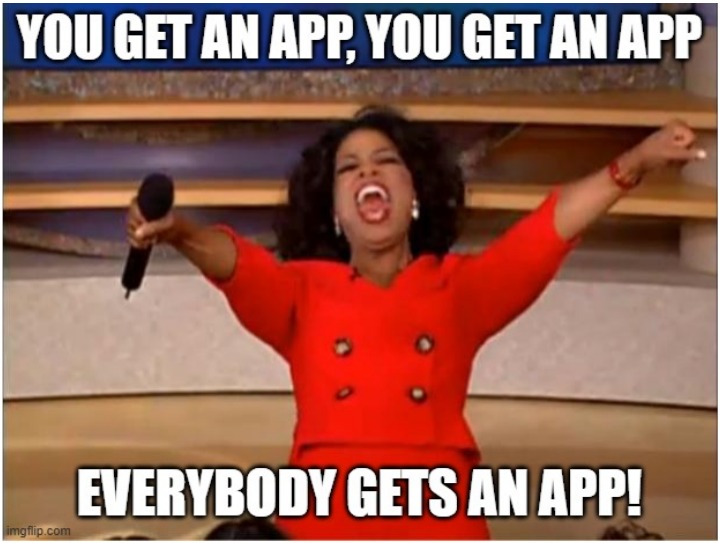
I see a lot of software companies suffering from this, and some will not survive.
So big software is taking the hit and we all get the dream app we’ve been waiting for. What’s the problem, Wes?
The Looming Cyber Risk
There is a catch. When everyone becomes a developer, everyone also becomes responsible for security they don’t understand. The same agent that coded your refrigerator-spoilage tracker quietly exposed an API key, rendering your device vulnerable. With vibe coding, it’s all about the vibe and not about the security, at least not yet.
The attack surface has grown exponentially.
Vibe coding can have impressive results, but it has not matured, at least for the layperson who gives one-line prompts to their coding agent. These applications are riddled with cybersecurity vulnerabilities.
Agentic coding has allowed programmers to produce four times as much code, but with 10 times the vulnerabilities. (Apiiro)
In 45 percent of all test cases, LLMs produced code containing vulnerabilities aligned with the OWASP Top 10, a list of the most serious web application security risks. (Help Net Security)
Developers are putting out code at a rate that is impossible to keep up with. Having human eyes check code line by line would prove to be a bottleneck.
We started with bloated software that didn’t do what we wanted. Now we’re ending with personalized software that does exactly what we want while making us more vulnerable. The buffet has been replaced by a home-cooked meal, and nobody taught us food safety.
Democratizing Defense
What we need is for security to become as democratized as development. The same agents that write your code need to audit it. The platforms that host vibe-coded apps need to scan them before they go live. And the people building what’s-in-my-refrigerator trackers need to understand that “it works” is not the same as “it’s safe.”
Everyone’s a developer now. The only question left is whether we learn to secure what we’re building before the world learns exactly how much we haven’t.
TL;DR: Vibe coding put a developer in everyone’s pocket. Commercial software is suffering. And the attack surface just got a billion people wider. Cybersecurity isn’t a specialty anymore, it’s a prerequisite.
Wesley Schaeppi